Copywriting Techniques That Make Book Blurbs Impossible to Ignore
Most readers give a blurb a few seconds. They read the first line, maybe the second, and either click through or scroll on. That decision has almost nothing to do with how good the book is and everything to do with how the blurb is built. Direct-response copywriters have spent a century working out how to hold attention on a page, and their tools transfer neatly to the back cover. Here are the techniques worth borrowing, and how to use them on fiction and non-fiction alike.
Hook first, housekeeping later
Open with a situation, not a label. "This book is about a woman who…" files the book into a category; it doesn't give anyone a reason to care. Compare:
A novel about grief and family secrets.
Her mother's funeral is on Thursday. The second will is in the drawer.
The second version does three jobs at once: it sets a scene, introduces a problem, and raises a question. Genre, length, awards and comparisons can wait until you've earned a bit of attention. Nobody abandons a blurb because the comp titles arrived second.
Swap weak verbs for verbs that cost something
Weak verbs describe. Strong verbs commit. Look at what changes when you replace "is", "has", "follows" and "explores" with verbs that imply consequence.
- She is a detective investigating a murder. → She takes the case that put her father in prison.
- The book explores negotiation. → Three conversations that decide whether you keep the contract.
- He has to look after his brother. → He buries the man who was meant to look after them.
Useful verbs tend to have a price attached: gamble, refuse, confess, abandon, trade, return, break, bury, hand over. Passive constructions hide whoever is doing the thing, so cut them where you can. "The truth is discovered" is a fact. "She finds the truth and wishes she hadn't" is a story.
Keep the tense steady, too. Most blurbs read best in the present tense — she takes, he refuses — because it puts the reader inside the action instead of reporting on it.
Leave a loop open
An open loop is a question the reader can't answer without turning the page. It's the most useful tool in direct-response copy, and it works just as well on a back cover.
A good loop has a clear shape: a person, a goal, an obstacle, and a cost. If any of those four is missing, the tension leaks out.
Four loop shapes that hold up:
- The impossible choice — two options, both costing something the character can't afford to lose.
- The deadline — a nameable amount of time. Days, hours, one train journey.
- The secret — someone knows something, and the blurb shows what it costs to keep it hidden.
- The contradiction — two facts that shouldn't sit together, such as a saviour who caused the disaster.
What you must not do is close the loop yourself. "Will she survive? Read on to find out" isn't an open loop, it's a shrug. State precisely what's at stake and let the reader supply the question.
Specificity beats adjectives
Adjectives are claims. Details are evidence. "A tense, gripping thriller" asks the reader to take your word for it, and every thriller says the same thing. A concrete detail proves it instead: "The ferry leaves at 6.40. She's still holding the receipt with someone else's name on it."
Be ruthless with the standard blurb vocabulary — gripping, compelling, unputdownable, heart-warming, hilarious, essential. If you'd feel odd saying it out loud to a friend, cut it. Numbers work where they're honest — three days, forty miles, one phone call — because they feel like memory rather than marketing.
A shape that holds
You don't need a formula, but most strong blurbs follow roughly this order:
- A hook line: a person, a place, something going wrong.
- The stakes: what it costs them if they fail or give up.
- The turn: the complication that changes the question.
- The promise: the kind of experience or result the reader is buying.
Keep it tight. A hundred to a hundred and fifty words is comfortable for most genres. If yours runs to three paragraphs of setup, the setup is usually the problem. Every sentence should be doing something the sentence before it hasn't already done.
Fiction and non-fiction: same tools, different levers
Fiction
Your loop is emotional: who wants what, who or what stands in the way, and what they'll have to give up. Voice matters here more than anywhere else, because a blurb in the same register as the book prepares the reader for the reading experience. Don't summarise the middle. Blurbs fail when they become plot recaps; a strong one gives away the setup and protects the turn.
Non-fiction
Your loop is practical: the distance between where the reader is now and where they want to be. Name who the book is for, describe the problem in their words, then say what changes. Method beats promise — list what the reader will be able to do, not how they'll feel about it. If your subject touches health, money or law, keep claims modest and say plainly that the book isn't a substitute for advice from a qualified professional who knows the reader's circumstances.
The fifteen-minute blurb edit
Draft once, then edit with a pen in hand:
- Read it aloud. Anything you stumble over gets cut or rewritten.
- Delete the first sentence if it's only clearing your throat.
- Replace every "is about", "follows" and "explores" with a verb that costs something.
- Circle each adjective and cut half of them.
- Check the loop is still open at the last line. If it's answered, open it again.
- Hand it to someone who hasn't read the book. Ask two questions: what do you think happens next, and would you read on? Ask them to answer without being kind.
A blurb isn't a summary. It's the first page of the book, written for someone who hasn't decided to trust you yet. Give them a person in motion, a cost they can feel, and one question they can't answer, and the click tends to take care of itself.
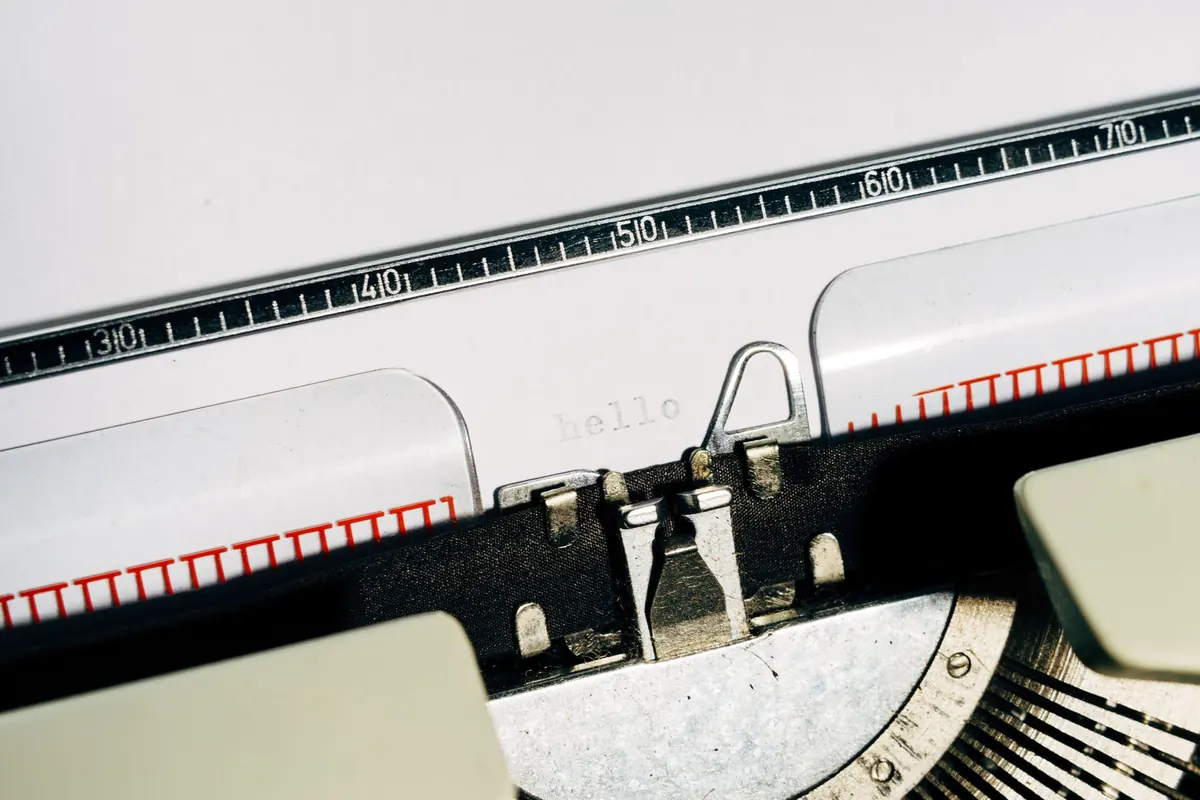
Photo: Markus Winkler / Pexels

Book Blurb A/B Testing: How to Compare Two Versions and Measure Which One Sells More
A practical guide to split testing your book description, from choosing one variable to running ad copy...
How to Write a Blurb for a Local or Regional Book: Tips for UK Authors
Local books sell on recognition, so your blurb must name the place, the period and the people quickly....
About Us